
The PRS Dragon II Pickups
Move over Smaug, there’s another dragon in town.

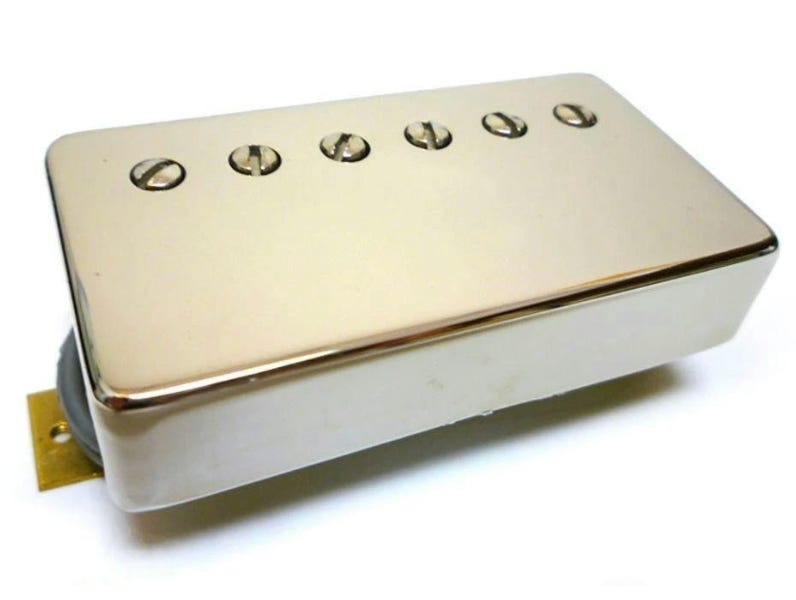
Recently, I picked up one of my holy grail guitars: an early 2000s Paul Reed Smith CE-22. More than casual readers will understand that, at this point, I am over the moon. For those new here, 22-fret guitars are my absolute favorite. There is just something spectacular about the sound of a neck pickup—be it a humbucker or a single coil—when it is in the “right spot.” I will die on this hill.
This guitar is stock from the Maryland factory, featuring the classic five-way rotary switch and Dragon II pickups. While a side-by-side comparison of two CEs is coming later, I want to focus on the Dragon IIs themselves. The Dragon II pickups represent a pivotal moment in PRS history, evolving from the original high-output Dragon I series introduced in the early 90s. While the original Dragons were known for their ceramic magnets and aggressive power, the Dragon II set shifted toward a more sophisticated Alnico 4 magnet architecture. This specific choice of magnet is the “secret sauce” behind that vintage PAF feel; Alnico 4 is often described by builders as a very transparent magnet, providing a balanced frequency response that lets the natural resonance of the guitar shine through without an overbearing mid-range hump.
PRS pickups have a level of polarization to them, but I believe most people who have actually played them agree they are great! When PRS started winding their own pickups, the market wasn’t the “boutique” explosion we see today. Now, it feels like a new winder pops up every week with a fresh vial of snake oil for the “best” tone. My “new production” 2021 CE-24 came with the now-standard 85/15 pickups, which are fantastic, and I’d argue that if they didn’t come stock, players would be clamoring to buy them aftermarket. However, back in the day, the lineup was simple: if you bought a CE-22, you got Dragon IIs. If you bought a Custom or Standard 24, you often got the HFS and Vintage Bass set. I had a 2002 Standard 22 many moons ago, and I can tell you after just a few moments of playing: I prefer the raw, “hot PAF” character of the Dragon II far more than the old HFS set.
On paper, these pickups are wound to provide that vintage character but with a bit more “grease” and heat in the recipe. The bridge position clocks in at a healthy 12k ohms, providing the bite to cut through a mix with a refinement that reminds me of a Seymour Duncan JB but with a smoother transition into harmonic feedback. I have been personally loving the neck pickup for the clean jazz playing I enjoy; with just a touch of the tone knob rolled off, you get a buttery clarity that never gets muddy. When playing late 80s metal licks or Jake E. Lee-inspired lead lines, the Dragon IIs really hit the mark. There is enough high-end to keep the attack interesting without becoming “pokey” or brittle. Yet, the low-end density remains tight and focused under heavy distortion, rather than becoming loose or flubby. While I haven’t tried it yet, I bet these pickups would sound great tuned down to D standard or lower.
The Dragon II might be my favorite Paul Reed Smith pickup. In many ways, they possess a DNA that reminds me of a Lollar Imperial, but with that extra touch of “hotness” that makes them incredibly versatile. While I usually change pickups in my “keeper” guitars, the Dragon IIs in this Maryland-built CE-22 might not be going anywhere. Even though a new set costs a pretty penny today, they stand up effortlessly against anything from Lollar, Bare Knuckle, or Arcaine. If you have a chance to try out a set, or a guitar with them in already, you might be suprised! I know I was!